In the US? Go to the US site
Sustainability
Making The Right Choices Today For A Sustainable Tomorrow
OUR COMMITMENT TO SUSTAINABILITY
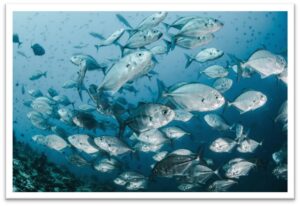
We are committed to making the right choices today to ensure a sustainable tomorrow for future generations. With over 30 million servings of sushi sold annually, we understand the strength of our ability to impact the lives of our customers, partners, and the communities that we serve. All aspects of the business model are viewed within a sustainability lens to confirm that the correct decisions are being made.
From seafood to packaging we do what we can to ensure that we follow the best sustainability practices ourselves while working hand in hand with our retail partners to align with their own sustainability programs.
Dave Jones, Bento President & CEO
OUR ENVIRONMENT, SOCIAL, GOVERNANCE PILLARS
We have defined each pillar based on Bento’s existing operations (footprint), our impact and our value system.
 PLANET
Serving better food means doing so with a lower impact on the environment. We are aiming to minimize our impact by reducing our energy use and carbon footprint across our supply chain, in our operations and in our consumer experience.
 PEOPLE
Our people are at the heart of our success. We will continue to foster an entrepreneurial and inclusive culture, while supporting the communities we operate in and serve.
 PRODUCTS
We know great food can be healthy, delicious, and responsibly sourced. We work closely with our suppliers and industry partners to continuously improve the traceability and transparency of our products.
OUR APPROACH
Continuous improvement has always been an important part of our DNA and in todays’ rapidly changing world, now more than ever before, we recognize the need to continuously assess our impacts and improve our sustainability performance wherever we can.
Worki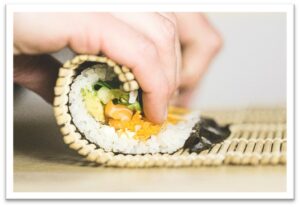 ng together with sustainability experts, industry partners, and suppliers, in 2021 we completed an in-depth materiality assessment to comprehensively map out our business, to better understand where our biggest impacts are and where we have the best opportunities to make a positive difference.
As part of this work, we have identified four Environmental focus areas to help prioritize our efforts and to help guide and challenge us to be the best we can be, across each of our brands:
1. GREEN HOUSE GAS AND ENERGY USE
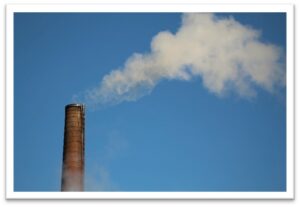
As part of a global food and hospitality business, we have an obligation to do all that we can to reduce our impacts in line with what the science is telling us. To this end we have already:
Carried out an initial Scope 1, 2 & 3 baseline of our green-house gas (GHG) emissions use across the Group, helping us to understand where we can make the biggest reductions, and on which aspects of our operations and supply chain to focus on.
Our Carbon and Energy Ambitions:
- At present, we are in the process of obtaining better quality data on our emissions across our value chain. We will then assess the best method to implementing a suitable target that is both ambitious and aligned to Group growth plans
- Integrating carbon and energy use reduction into all business decisions
- Aim to achieve Net Zero Commitment by 2050
2. FOOD WASTE
Growing food to feed the world’s increasing population uses vast areas of land, and abundant amounts of energy and water, which can create social and environmental impacts, pollution, and waste. To minimize food waste, we have:
- Partnered with T
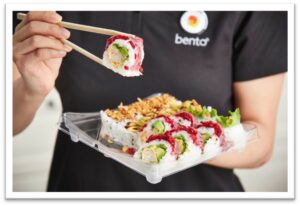 oo Good To Go in Canada and the United States, a food diversion App that enables consumers to buy our food at discounted rates when it is still deliciously fresh, but is soon to come to the end of its’ shelf life.
- Begun to compost prepared and production organic food waste at our commissary locations in North America.
- Joined composting programs with our grocery retailer partners in Canada to divert processed and out of date products from landfill.
- Begun to compost prepared and production organic food waste at our commissary locations in North America.
Our Food Waste Ambitions:
- As we build data and knowledge regarding our GHG Scope 3 footprint, this also includes food waste data. We are aiming to set quantitative targets on food waste across kiosks, restaurants, and commissaries.
- In parallel, we will continue to implement effective impactful solutions to reduce our current food waste utilizing aspects of the food recovery hierarchy.
3. RESPONSIBLE SOURCING

We recognize that we are only as sustainable as the suppliers from whom we buy our products. Sustainability is integrated into our buying practices, and we work closely with our suppliers and industry partners to continuously improve the traceability and transparency of our products, as well as their overall sustainability performance.
Fish & Seafood:
Responsibly sourcing high-quality seafood is extremely important to us, and we have stringent sourcing criteria to determine our purchasing decisions.
Eggs, Dairy and Meat:
Whilst eggs, dairy and meat represent a small proportion of our menu, we still strive to reduce our impact in this area, increasing the percentage of vegetarian and vegan dishes that we offer and improving animal welfare.
Animal welfare is important to us at Bento and we continue to implement processes within our sourcing strategy to ensure that the protein products purchased meet our standards. Higher welfare for broiler chickens is a key area that we are supporting with significant resources. Bento does not process or raise chickens directly. We purchase from suppliers, and it is our responsibility to ensure that we partner with suppliers that are aligned with our commitment to higher animal welfare standards. We’re proud to be supported by Compassion in World Farming, a leading global animal welfare NGO on this work. We believe for change to happen we need to work collectively as an industry. This is why we have signed-up to the North American Chicken Commitment and pledge to continue to improve our welfare standards for our business. In 2022 we began to track supplier compliance against the Better Chicken Commitment standards and as of January 1, 2023 we are able to report on the following progress with our suppliers:
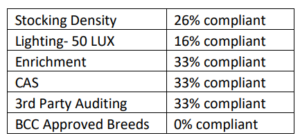
We had a goal to develop a detailed roadmap by the end of 2023. We are continuing this work by gathering the necessary information from our suppliers and working internally with cross functional teams to understand the opportunities and obstacles to create an achievable roadmap. To ensure that we publish a robust roadmap that we have confidence in, we will continue working with support from Compassion in World Farming to publish a detailed roadmap by mid-2024.
4. PLASTICS, PACKAGING AND PAPER
 We recognize that to continue to provide the freshest, highest quality food, we need to protect the environments in which our food and products are produced, transported, consumed, repurposed, and disposed of. We are focused on the approach of reduce, re-use and recycle (in that order wherever possible), so that waste is seen as a resource, as part of a wider circular economy.
Our focus is on minimizing our demand on our natural resources and maximizing the efficiency with which we use them. We support the Canadian and US Plastics Pact and are looking at how we can collaborate with innovative and creative suppliers and industry partners to work holistically to reduce the demand and our impact of our primary, secondary, and tertiary packaging.
Our Packaging Targets
- All primary plastic packaging (trays/bowls/boxes/lids/bags) will be 100% reusable, recyclable or compostable by 2025
- 30% average post-consumer recycled content across all plastic packaging by 2025
- Eliminate all unnecessary and problematic plastic by 2025
- Fiber based packaging to be 100% deforestation free & FSC/PEFC certified by 2030
MEMBERSHIP:

REPORTING & TRANSPARENCY
Our parent company Snowfox Group regularly tracks and reports on our sustainability performance. To learn more about our sustainability initiatives please read our Sustainability Guide & Policies:
For more information contact us at sustainability@bentosushi.com
We are committed to sustainability and reducing our environmental impact. We recognize that the actions we take today will have a lasting impact on the world around us, and we are dedicated to creating a more sustainable future for all.